

The benefits of acoustic glass in a car
When you’re behind the wheel, numerous sounds vie for your attention. There’s the engine’s hum, the whistle of the wind past the car, the din of the road, and the chatter of any fellow passengers. These noises become rather distracting, making it challenging to concentrate on driving.
Acoustic glass in your car provides numerous benefits. One of the main advantages is its ability to reduce external noise (e.g., soundproofing), enhancing driving comfort. With acoustic glass, you can enjoy a quieter driving experience as it significantly reduces wind, rain, and traffic noise.
This creates a more peaceful environment inside the car, making your journeys more enjoyable and less tiring.
Additionally, this glass type optimises sound levels due to noise control and reduces discomfort and distractions for you and your passengers. This feature enhances the overall driving experience and ensures a more pleasant ride.
Moreover, having acoustic interlayered glass in your side and rear windows bolsters your safety whilst driving. It protects you in case of glass breakage by preventing large shards from falling inwards, reducing the risk of injuries during collisions. The acoustic interlayer in the glass also makes it more difficult for potential break-ins or theft attempts, adding an extra layer of security to your vehicle.
Furthermore, acoustic car glass contributes to fuel efficiency. It achieves this by reducing the dependence on thick windscreen glass, thereby reducing carbon emissions. This benefit not only improves your driving experience but also benefits the environment.
Composition and layers of acoustic glass
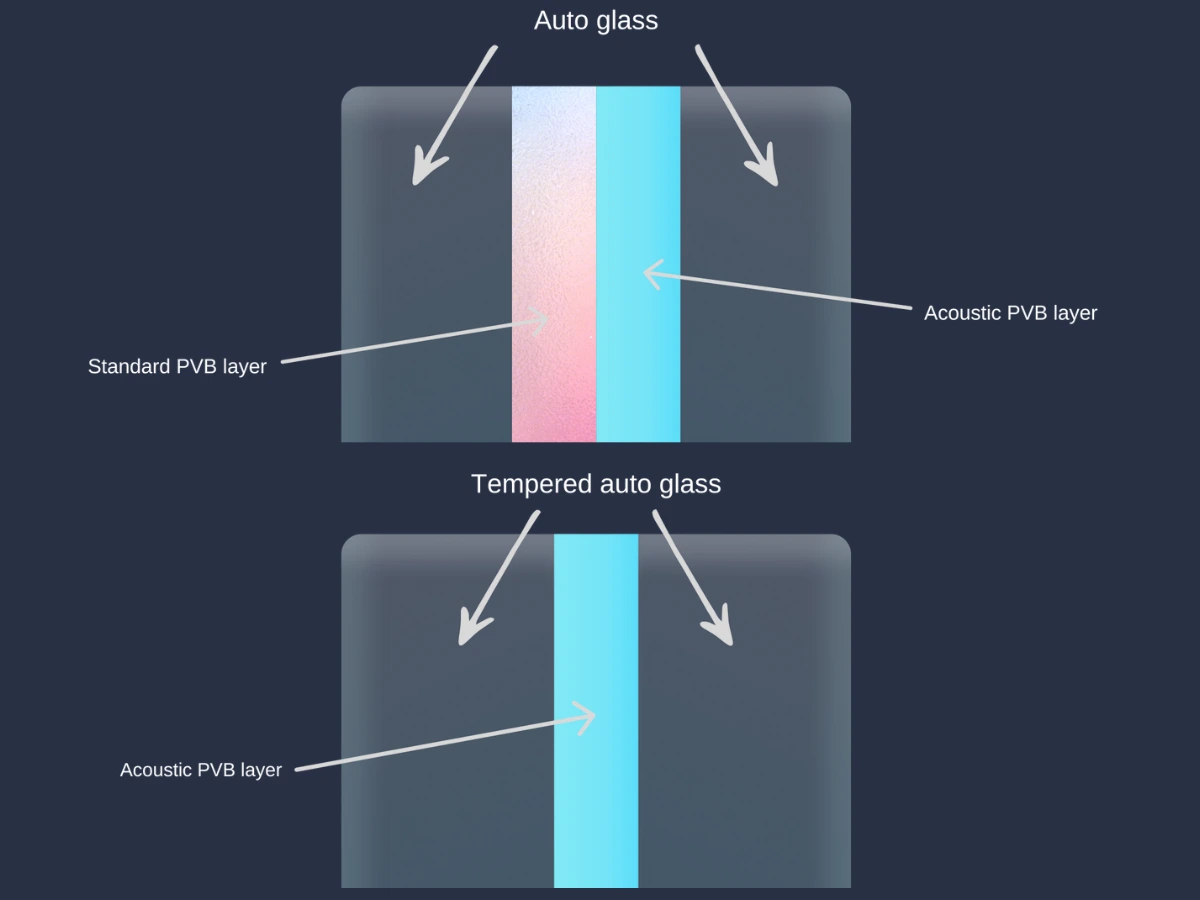
Typically, two types of car glass make up your vehicle’s car windows: tempered and laminated.
An acoustic windscreen is a standard triple-layered windscreen enhanced with an added acoustic film sandwiched in between.
Structure of a typical laminated windscreen: Glass + PVB Film + Glass
Structure of an acoustic laminated windscreen: Glass + PVB Film + Acoustic PVB Film + Glass
As illustrated by their make-up, the heightened security is an additional perk of acoustic windscreens. Including the extra layer also enhances the glass’s durability, besides reducing noise.
This specific glass can be used as a substitute for the standard single-panel tempered glass found in cars’ side and rear windows. Instead of just a single thick layer of tempered glass, acoustic car glass comprises two slimmer layers of glass with identical acoustic interlayers.
The principle mirrors the acoustic windscreen, though the glass type varies.
Their multi-layered construction makes acoustic side and rear windows sturdier and more resistant to shattering than standard tempered car glass. This grants your vehicle an added measure of protection.
How acoustic glass transforms the driving experience
Acoustic auto glass has been meticulously crafted to decrease noise levels within your car, promoting a distraction-free drive.
This feature incorporates an acoustic vinyl layer sandwiched between two glass sheets, adept at absorbing and deflecting noise. The result is a noticeable reduction in wind, rain, and traffic sounds, ensuring the driver’s and passengers’ tranquillity.
With acoustic glass, the essence of a refined driving experience is realised, devoid of unnecessary noise.
Why acoustic glass is a top choice for UK drivers
For those navigating the UK roads, the perks of acoustic car glass are palpable, delivering a quieter, more pleasurable journey.
Beyond its noise-cancelling prowess, acoustic glass bolsters vehicle security due to its enhanced resilience against breakage. Furthermore, it efficiently filters out a significant portion of harmful ultraviolet rays, safeguarding occupants and the car’s interior alike.
The role of acoustic glass in noise reduction
The beauty of acoustic glass lies in its ability to markedly lower in-car noise levels. But how?
The secret is the additional acoustic vinyl layer. This unique structure absorbs and deflects external sounds, creating an undisturbed ambience.
Yet, its merits extend further. It protects occupants and the vehicle’s interior by shielding them from most ultraviolet rays. Its sturdier composition also raises the security bar, making break-ins more challenging.
Thus, acoustic glass offers auditory comfort and ensures enhanced safety and UV protection during your travels.
Acoustic glass: a must-have feature?
If you’re looking for a feature that enhances comfort and reduces noise levels in your vehicle, acoustic glass is a must-have.
With soundproofed glass, you can enjoy a quieter driving experience and minimise distractions caused by excessive noise. It optimises sound levels, reducing discomfort for you and your passengers.
Acoustic car glass also offers added benefits, such as improved fuel efficiency by reducing the dependence on thick windscreen glass, and it protects you in case of glass breakage by preventing large shards from falling inward.
Not only does it enhance your overall driving experience, but it also provides an additional layer of safety and security.
Considering acoustic glass for your car: what to know
Many motorists are surprised to discover how many car models can accommodate acoustic glass as a replacement option, even when it wasn’t a standard feature originally from the factory.
At UK Car Glass, precision matters. We always decode your vehicle’s VIN to identify and match the exact factory spec of your glass. Contact us to explore your options before making any decisions.
However, it’s also important to note the divided opinions within the auto glass industry.
Some technicians firmly believe that replacing a standard laminated windscreen with its acoustic laminated glass counterpart can lead to a noticeable reduction in cabin noise.
On the other hand, some argue the benefits are marginal unless the regular tempered side windows are also replaced with acoustic versions. They reason that noise waves can still penetrate the vehicle’s interior through the sides, somewhat negating the effect of the acoustic windscreen.
The reasons behind the growing popularity of acoustic glass in the UK
To experience a quieter and more comfortable ride, consider opting for a vehicle equipped with acoustic glass, which has been growing in popularity in the UK. Here are three reasons why UK drivers are choosing acoustic glass for their vehicles:
- Reduced noise: Acoustic glass is designed to minimise noise levels inside the car, creating a peaceful environment even on busy or fast roads.
- Enhanced comfort: A more refined and comfortable driving experience — the cabin feels shielded from outside noise.
- Improved safety: Acoustic glass reduces noise and provides an extra layer of security. The multi-layer construction is more difficult to break in an accident or break-in attempt.
Upgrade to a vehicle with acoustic glass and discover the benefits of a quieter, more comfortable, and safer ride.
Conclusion
In conclusion, acoustic glass is revolutionising the driving experience for drivers. With its ability to reduce noise, enhance security, and protect against harmful UV rays, it’s no wonder why more and more drivers are opting for this feature in their vehicles.
Remember, silence is golden, and you can enjoy a peaceful and serene ride with acoustic glass every time. So why wait? Upgrade your car with acoustic glass and experience the difference for yourself.
Key takeaways
- Acoustic glass adds a sound-dampening PVB layer between two sheets of glass — reduces wind, road and traffic noise
- Common on premium and higher trim levels of mainstream cars
- Replacing standard laminated glass with acoustic on the windscreen helps, but side windows matter too for full effect
- Adds approximately £50–£100 to the windscreen replacement cost
- We always decode your VIN to match the exact glass spec on your car — including acoustic if you have it