
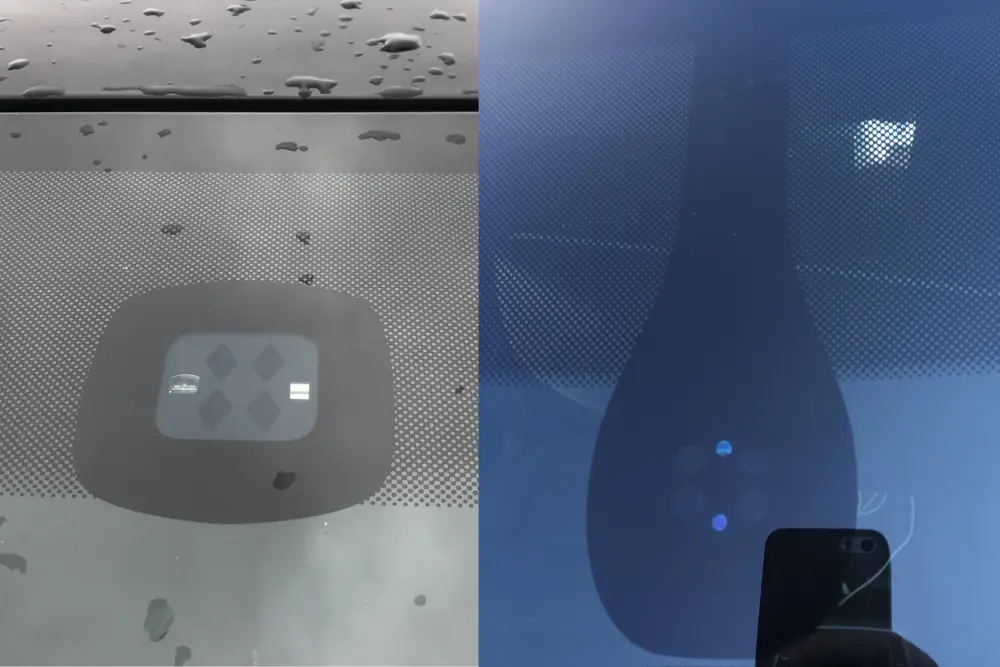
Explained: the purpose and function of a car’s rain sensor
A rain sensor in a car detects any rainfall or moisture that makes contact with the windscreen and automatically adjusts wiper movement accordingly.
Rain sensors assist in the ongoing battle against driver distraction. The rain sensor will, for the most part, be attached to the car glass behind the windscreen and the rearview mirror.
A guide to understanding the technology behind a car’s rain sensor
For a long time, the only speeds windscreen wipers had were low, medium, and high — activated when the driver set the wiper switch to I, II, or III rather than the off position.
A rain sensor in a car is an electronic sensing device that detects the presence of rain. It has a small electrical connection attached to the windscreen and works by measuring the amount of light reflected from the glass surface. The sensor then sends a signal to the car’s wiper control module, which activates the wipers automatically when it detects rain. This helps drivers keep their vision clear while driving in inclement weather conditions.
Why do we need a rain sensor?
Rain sensors are a great feature to have in any car. They can help keep you safe and make driving more comfortable. With a rain sensor, wiper blades will automatically turn on when moisture is detected. This eliminates the need for manually turning them on and off, which can be difficult during heavy rain or snowfall. Furthermore, rain sensors save time by turning on at exactly the right moment and turn off as soon as the windscreen is clear.
Having a rain sensor also helps reduce distractions while driving, allowing drivers to keep their eyes on the road instead of constantly adjusting their windscreen wipers.
Purpose of a rain sensor
Having a rain sensor in your car can be very convenient, especially when driving and it starts raining without warning. The sensor will automatically turn on your wipers, so you don’t have to worry about remembering to do it yourself. This can help make your drive much safer as visibility is improved with the help of activated wipers.
How the rain sensor works
The rain sensor in a car is an important part of the vehicle’s safety system. It is designed to detect moisture on the windscreen and then activate the wipers for a set amount of time. This helps reduce driver distractions and improve visibility when driving in wet weather. So, how does it work?
The rain sensor typically consists of a small infrared beam and a receiver. The infrared beam is directed at the windscreen and will be reflected off the glass if water droplets are present. This reflection triggers the receiver to activate the wiper blades for a predetermined time period. Depending on the type of car, this can range from 0–45 seconds or more.
The rain sensor also has adjustable settings that allow drivers to control how long they want their wipers to stay active after detecting moisture on their windscreen. This feature helps drivers customise their experience to suit their preferences and driving environment. By controlling these settings, drivers can ensure that their vision is never obscured by rain or snow while on the road.
Where can you expect to find it?
Rain and light sensors are often coupled together in today’s cars, which will turn on the headlights in dim lighting. Behind the windscreen, just below the rearview mirror, lies a dark area where the rain sensor can be found. This sensor is generally seen in newer model cars and is often a square-shaped, discrete panel that might go unnoticed.
Replacing a windscreen is made simple with this sensor — all it requires is to attach the existing one to the new screen with a new sensor pad on the measuring component. These two sensors work together to ensure that you can drive home safely, regardless of the weather.
Do rain sensors make a difference?
Safety is paramount in the automobile industry, and the rain sensor is a great way to ensure that. It can help drivers avoid sudden obstructions on the road, such as when overtaking trucks on wet surfaces.
In the past, this type of feature was only available on costly luxury car models. Today, the rain sensor application as standard equipment is becoming more widespread and can now be found on many everyday vehicles.
Examples of car manufacturers who have included the rain sensor in their models: Audi, BMW, Chevrolet, Ford, Hyundai, Kia, Nissan, Mazda, Peugeot, Toyota, Vauxhall and Volkswagen.
Key takeaways
- Detects moisture on the windscreen using an infrared beam and reflection sensor
- Sits behind the rearview mirror, often paired with a light sensor for auto-headlights
- Standard on most cars built after 2010, on virtually all premium and many mainstream brands
- Replacing a windscreen with a rain sensor requires re-attaching the sensor with a fresh sensor pad
- Adds approximately £30–£60 to the windscreen replacement cost